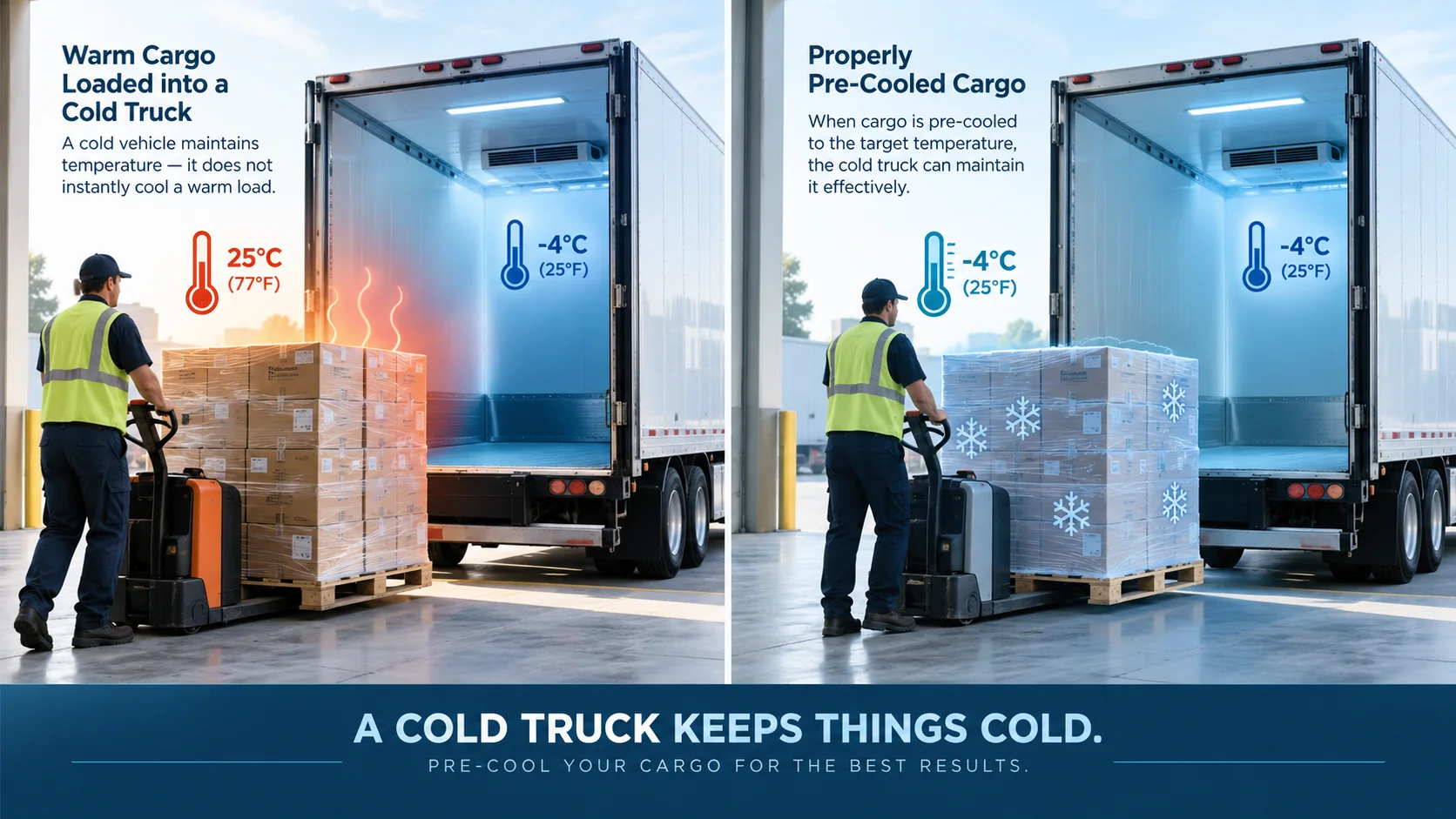
Preparation and transportation are different steps
Ocean Network Express’s reefer-handling guidance distinguishes pre-cooling cargo from maintaining its condition in a refrigerated container. Its equipment instructions concern ocean containers, not a universal truck-loading procedure. The useful planning principle is to specify the starting condition and the transport task separately.
For a road shipment, agree the product requirement with its owner and the vehicle/loading arrangement with the carrier. Cargo preparation, vehicle preparation and the handoff environment each need an appropriate procedure.
A ready time should mean thermally ready too
Imagine a fictional producer labels an order “ready at 2 p.m.” because packing is complete. Its product procedure, however, requires a cooling step that will not finish until 3:30 p.m. A vehicle sent for 2 p.m. collection has been given a different readiness message from the one the product needs.
The solution is not to promise that driving will finish the cooling process. Establish the actual release time, then match the collection and delivery plan to it. When cooling takes longer than planned, update dispatch before the vehicle arrives.
Specify the job instead of lowering the dial
A colder setting is not automatically an appropriate response to a warmer load. It may conflict with the product’s allowed conditions. The sender should not improvise a compensating setting without the responsible product specialist and carrier agreeing the plan.
The mass, packaging and distribution of goods also matter to any cooling task. A few outer readings do not establish the condition of the entire load. A separate processing step should not be silently converted into a transport requirement.
Use a clear release note
A useful note identifies the product, packed quantity, required transport conditions, actual release check, time of that check and the person authorising collection. It does not need to be complicated, but it should make “ready” unambiguous.
WTM’s refrigerated Sprinters and 5-ton trucks support temperature-controlled deliveries. Provide the load’s starting requirements and receiving deadline when requesting the service. For recurring shipments, include preparation time in the standing arrangement rather than repeatedly relying on emergency collection changes.
Does this mean the empty vehicle should never be pre-cooled?
No. Vehicle preparation depends on the equipment and loading environment. Follow the applicable carrier and equipment procedure; cargo pre-cooling and vehicle pre-conditioning are separate questions.
Can a delivery record prove correct product release?
Not by itself. Keep the sender’s release evidence, transport records and receiving checks associated with the same shipment, with each record’s role clear.