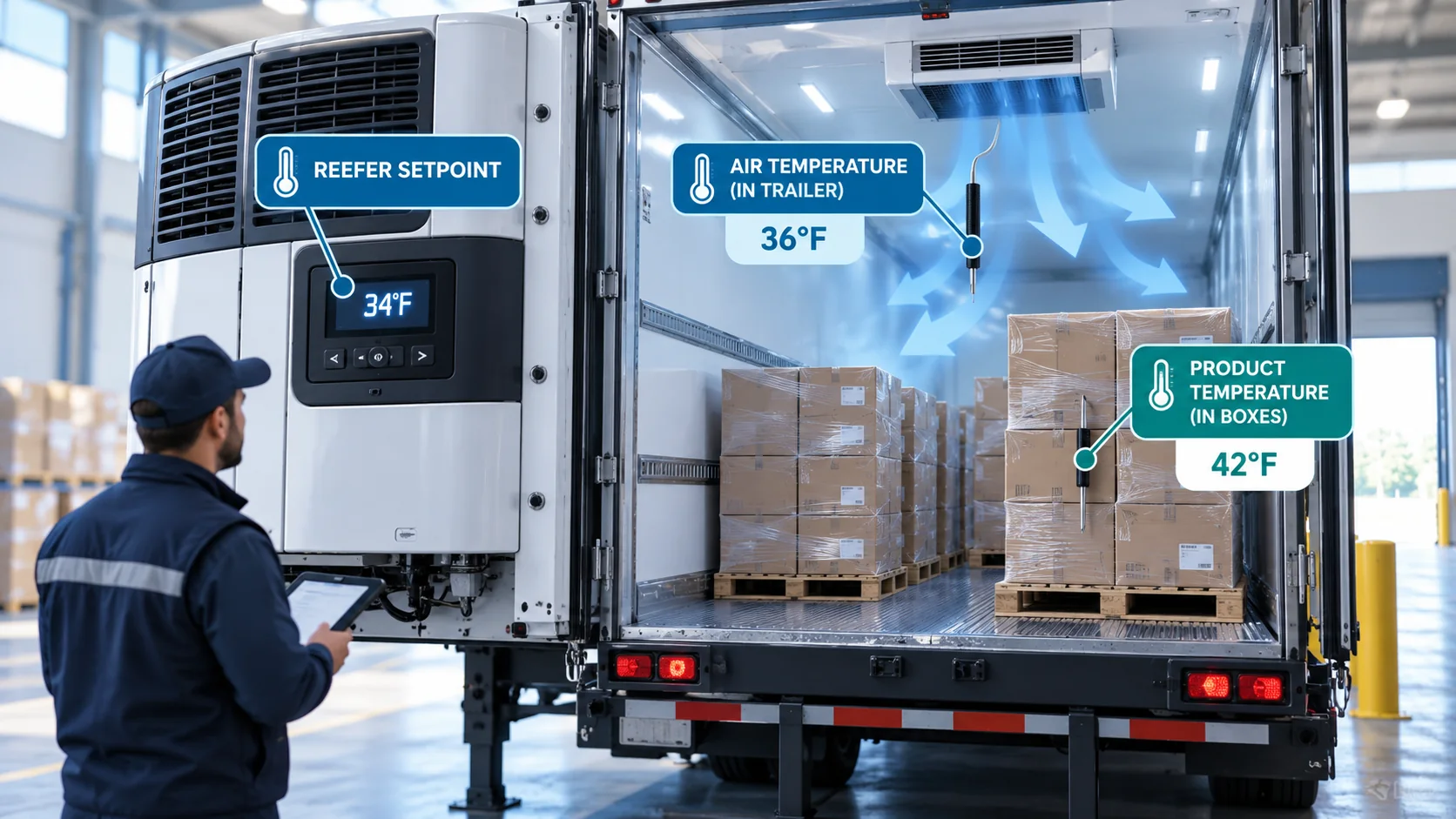
Name what the number represents
A display reading “4°C” is incomplete without context. Is it the selected target, air returning to the refrigeration unit, or a measurement associated with the goods?
Carrier Transicold’s additional-sensor description explicitly distinguishes cargo-box and return-air temperatures. That equipment example demonstrates why measurement location matters; it does not establish the sensor configuration on a particular WTM vehicle.
A fictional receiving example
Suppose a record shows a setpoint of 4°C, a return-air reading of 4.4°C and a package-associated reading of 5.1°C. The values are different, but the table does not tell us whether the shipment met its requirements.
To decide that, the product owner needs the applicable transport specification, measurement method, sensor placement, timing and acceptance rules. Do not choose whichever number looks most favourable or compare an air value against a limit intended for a different measurement.
The numbers here illustrate record interpretation; they are not recommended transport temperatures for any food or medical product.
Write the instruction before dispatch
Replace an ambiguous “keep cold” note with the product’s approved transport requirement. State whether it calls for a vehicle setting, a monitored range at a defined location, or additional reporting. Identify incompatible requirements within a mixed order rather than averaging them.
If a logger is included, record its identifier and intended placement. Keep its data associated with the shipment reference. Where a specific measurement would require opening or probing a package, agree who is authorised to do it and use the product owner’s procedure.
Make the handoff useful
The sender should communicate the starting condition and instructions; dispatch should know the requested equipment and monitoring arrangement; the receiver should know the records it expects. This reduces the chance of discovering after delivery that each party was interpreting “temperature controlled” differently.
WTM provides refrigerated transportation and real-time GPS shipment tracking. Any product-temperature reporting requirement should be part of the shipment arrangement. The Customer Portal’s delivery documents and a product logger serve related but different purposes.
Is a refrigeration setpoint proof the goods stayed within their required range?
No. It states a control target. Evidence about the goods depends on the relevant monitoring arrangement and records.
Can I compare two temperature devices directly?
Only after checking what they measure, their placement, timing and specifications. Two different locations can legitimately produce different observations.