Match the test to the distribution question
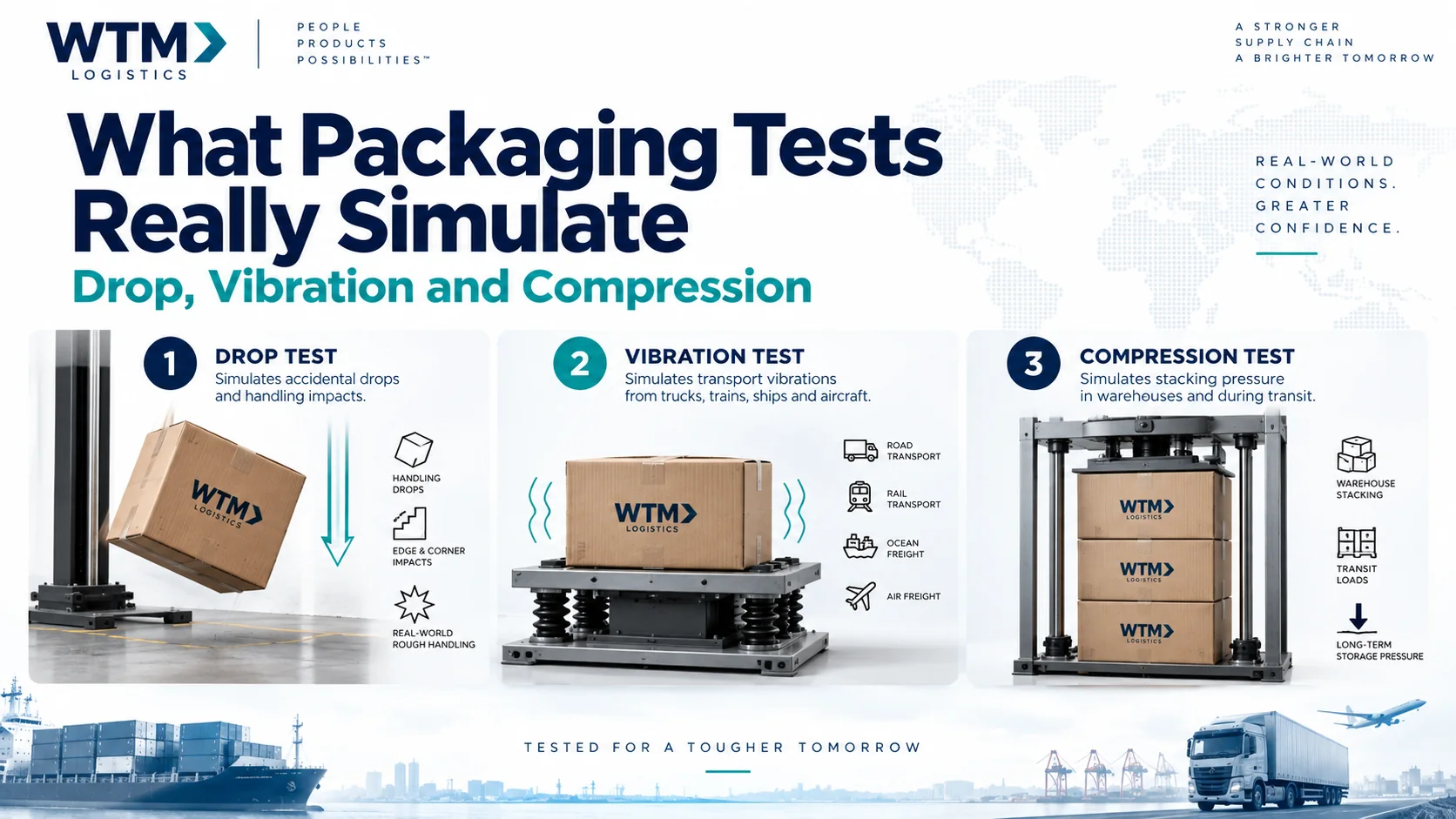
The International Safe Transit Association’s testing-equipment guidance identifies equipment for different hazards, including shock, vibration, compression and atmospheric conditioning. Requirements depend on the selected test procedure. A packaging specialist should choose the relevant procedure, sequence and acceptance criteria rather than copy isolated test settings from a website.
This is a concept guide, not a replacement for a controlled test procedure.
Test the shipped configuration
A useful sample should represent what the packing team actually sends: product, internal protection, closure, labels and any pallet or crate. Testing a carefully prepared prototype is less informative when production shipments use different materials.
For example, a fictional appliance supplier evaluates a carton with a shaped internal support. If purchasing later removes that support to reduce cost, the earlier result does not automatically describe the new package. Record the configuration and revision so everyone knows what the test covered.
Decide what “pass” means before testing
A package might look intact while the product inside no longer works. Another may show cosmetic carton damage while the product remains acceptable. Define the relevant criteria before seeing the outcome.
A practical brief names the product revision, packing specification, intended distribution environment, test method, observations required and acceptance authority. It also describes how the product will be checked afterwards. Do not judge success solely from an unbroken seal or a photograph of the outside.
Use failures as design information
Record where and when a problem appeared. Compare the tested configuration with the design intention. Did internal movement occur? Did a closure open? Was a load-bearing feature unsupported? These questions help direct an improvement without assuming that every failure requires a heavier outer box.
When changing a design, retain what changed and why. A later result is easier to interpret when only the intended variables have changed, rather than several undocumented substitutions happening at once.
Connect testing to the actual shipping service
Tell the packaging specialist whether you expect parcel handling, palletised LTL or a dedicated vehicle arrangement. Discuss the complete journey rather than only the driving leg. WTM can review transport requirements, but this article does not claim WTM operates a certified package-testing laboratory or that booking transport certifies packaging.
Is one successful trial shipment enough?
It is useful experience, but it is not the same as a controlled assessment of defined hazards. Record its limits when deciding what evidence you need.
Should staff drop-test a heavy package themselves?
Do not improvise hazardous tests. Use a competent testing provider with appropriate equipment and an agreed procedure for the package.