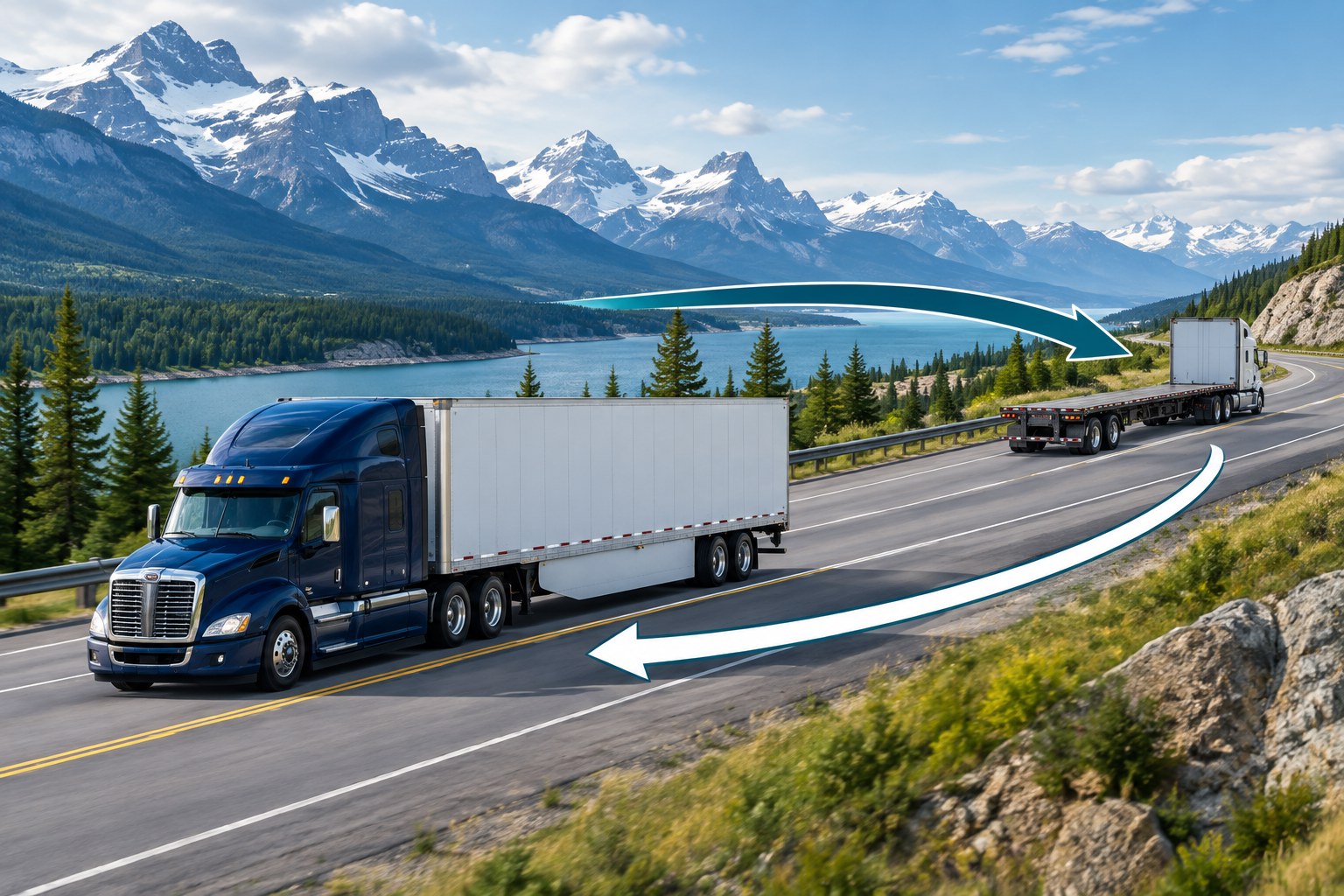
C.H. Robinson’s carrier glossary distinguishes backhaul, deadhead and bobtail travel. Bobtail means a tractor without a trailer; it should not be used as another word for every empty truck trip.
Think about the whole vehicle movement
A shipper sees its collection and delivery. Dispatch also considers where the vehicle is before collection and where it needs to go afterwards. A return load must fit those locations, its ready time, the driver’s schedule and the equipment requirements.
A refrigerated order, a tall crate and a small dry parcel are not automatically interchangeable opportunities merely because they travel south. The movement still needs the correct transport and handoff arrangement.
A fictional kilometre comparison
Assume an outbound delivery covers 300 loaded kilometres and the vehicle returns 300 kilometres empty. Total travel is 600 kilometres, of which 300 are empty: 50%.
Now consider a different compatible plan with an extra repositioning movement:
Total travel is 620 kilometres. Empty-distance share is 40 ÷ 620 × 100 = 6.45%, rounded. The empty share is lower, but total distance is 20 kilometres higher. That distinction prevents an unsupported claim that any reduction in empty percentage must reduce total fuel use or emissions.
These numbers illustrate a network calculation, not an actual WTM route or quote.
Why a return load still has a price
It uses time, vehicle capacity and handling, and may add distance or constrain the next assignment. Its commercial value depends on the available alternatives and the complete operating plan. “The truck is coming back anyway” is an incomplete pricing model.
Ask for the service you need: exact collection point, packed load, earliest ready time, delivery requirement and flexibility. Dispatch can then assess whether it fits an existing movement or needs a separate arrangement.
Do not let an opportunity replace the commitment
A flexible return shipment may fit one schedule; an urgent shipment with a fixed receiving deadline may need dedicated transport. Establish the collection and delivery commitment before telling your customer the load is booked.
WTM serves movements in both directions across its applicable routes. The Customer Portal supports quote review, payment and available shipment records, while dispatch confirms the transport plan for the actual request.
Is every southbound shipment a backhaul?
No. Direction alone does not define the vehicle’s assignment. The term depends on the particular sequence of loads.
Does a backhaul quote always cost less?
No. Compare actual service quotes for the same shipment and deadline. An assumed empty return is not a guaranteed price advantage.